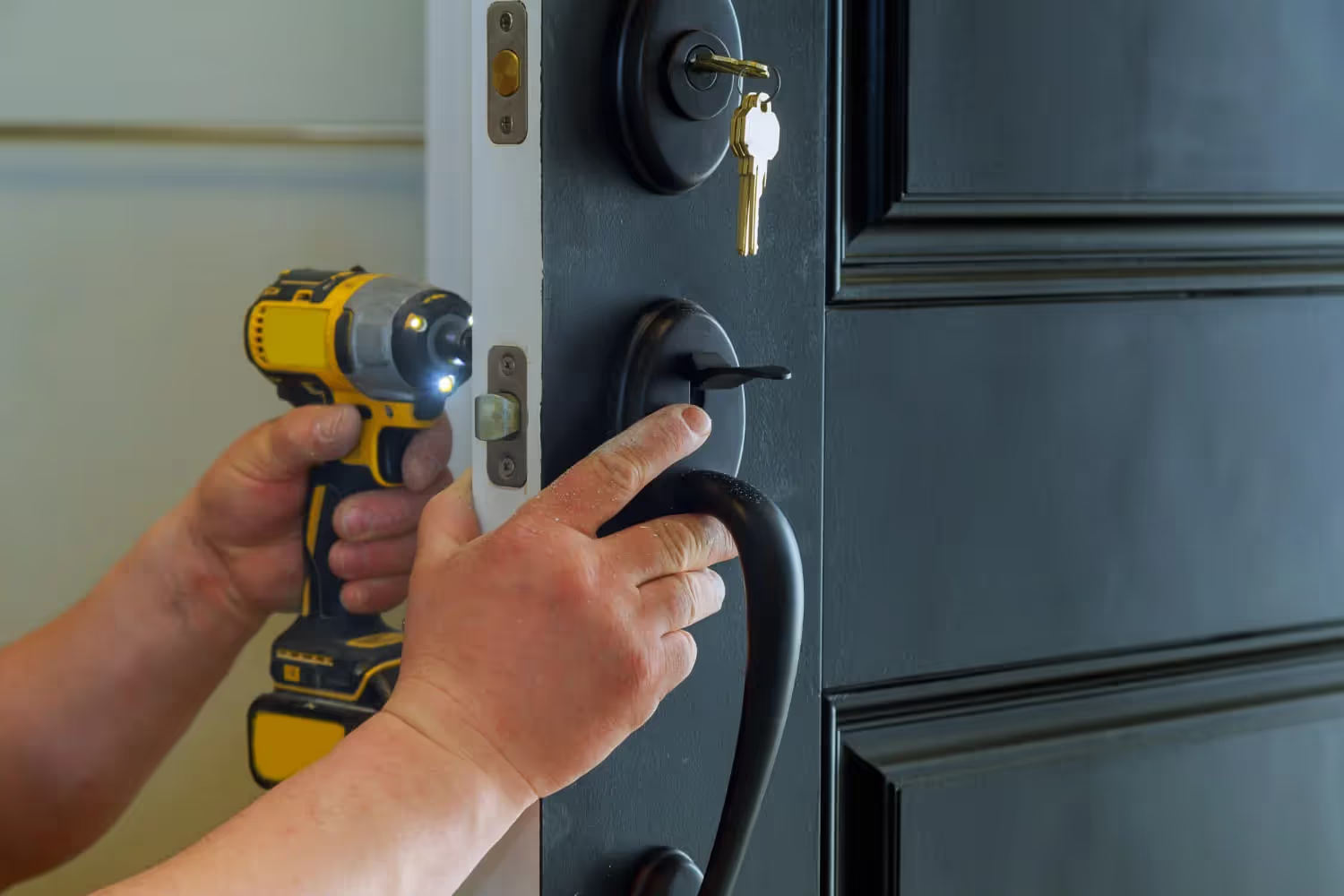
A squeaky door is the perfect first DIY project: it takes minutes, uses basic tools and gives instant results. This guide also covers two related annoyances: a door that sticks and a door that won’t latch.
Fixing a squeaky door hinge
What you’ll need
- Hammer and a nail or thin punch
- Lubricant: white lithium grease, silicone spray or a dab of petroleum jelly
- Paper towels or a rag
- Steel wool (optional, for rusty pins)
Steps
- Close the door so its weight is supported and the hinges stay aligned.
- Remove one hinge pin at a time. Tap a nail up from underneath the hinge to push the pin out.
- Clean the pin with a rag, and scrub off rust with fine steel wool if needed.
- Lubricate the pin with a thin coat of grease or silicone.
- Reinstall the pin, tap it fully down and swing the door several times to spread the lubricant. Wipe away any excess.
- Repeat for each squeaky hinge.
Tip: Avoid heavy oils that attract dust and can drip onto floors and trim.
Fixing a door that sticks
Look for rub marks along the edge of the door or frame. Often a loose hinge screw is to blame, so tighten every hinge screw first. If a screw just spins, replace it with a 3-inch screw that reaches the wall framing behind the jamb. This pulls the door back into position.
Fixing a door that won’t latch
Close the door slowly and watch where the latch meets the strike plate. If it’s slightly high or low, loosen the strike plate screws and adjust it, or file the opening a little larger with a metal file. Tightening the hinge screws can also fix latch alignment.
Why Do Doors Start Squeaking?
Hinges squeak when the pin and the knuckles rub metal on metal. Over time, the factory grease dries out, dust gets in and a little rust forms. Humidity changes make it worse, which is why some doors only squeak in winter. Heavy doors also wear hinges faster because of the extra weight.
Quick Fixes When You Don’t Have Lubricant
No grease in the house? A small amount of bar soap or candle wax rubbed on the hinge pin works in a pinch. Cooking oil also stops a squeak, but it can go sticky and attract dirt, so treat it as a short-term fix. Buy proper white lithium grease or silicone spray for a lasting result.
Fixing a Door That Rubs the Floor
If the bottom of the door drags on new flooring or a thick rug, the door may need trimming. Remove the door from its hinges, mark a straight line and cut it with a circular saw guided by a clamped straightedge. Seal the cut edge with paint or finish so it doesn’t absorb moisture. While the door is off, check its seals. Our guide on how to weatherstrip a door covers drafts around exterior doors.
When to replace door hardware
If the hinges are bent or the latch mechanism is broken, replacement hardware is inexpensive. Match the hinge size and corner radius (square or rounded) to your existing hinges for a quick swap.
Build your confidence with this quick win, then assemble your essential DIY tool kit for bigger projects.
Keep Every Door Working Smoothly
Doors take a beating every day, so a little care goes a long way. Once a year, tighten the hinge screws, lubricate the pins and check that the latch lines up with the strike plate. Exterior doors need extra attention because weather makes the frame swell and shrink. If you’re hanging things on the back of a door, use hooks sized for hollow-core doors so you don’t crack the skin.
Weather getting colder? Learn how to clean a dryer vent as part of your fall routine. Handy with a drill now? Try anchoring furniture to the wall next.